
Mental Hellth Dumpster Fire is part of a three-year long artistic research project on burnout.
Throughout the research project on burnout that resulted in the multimedia transdisciplinary work Mental Hellth Dumpster Fire, I’ve shared interventions along the way. These include the Band of Burnouts research lab in fellowship with the School of Commons, practice and production of asemic writing as an expression of the body as a producer of knowledge, and insight into how this particular piece was conceived during an artistic research residency in a Swiss psychiatric clinic. Here I give more detail on Mental Hellth Dumpster Fire itself and how I arrived at its nexus; positing a cultural ‘diagnosis’ that burnout is no longer an individual condition, but a contemporary social mood.
DIAGNOSIS
Burnout is no longer an individual condition,
but a contemporary social mood.
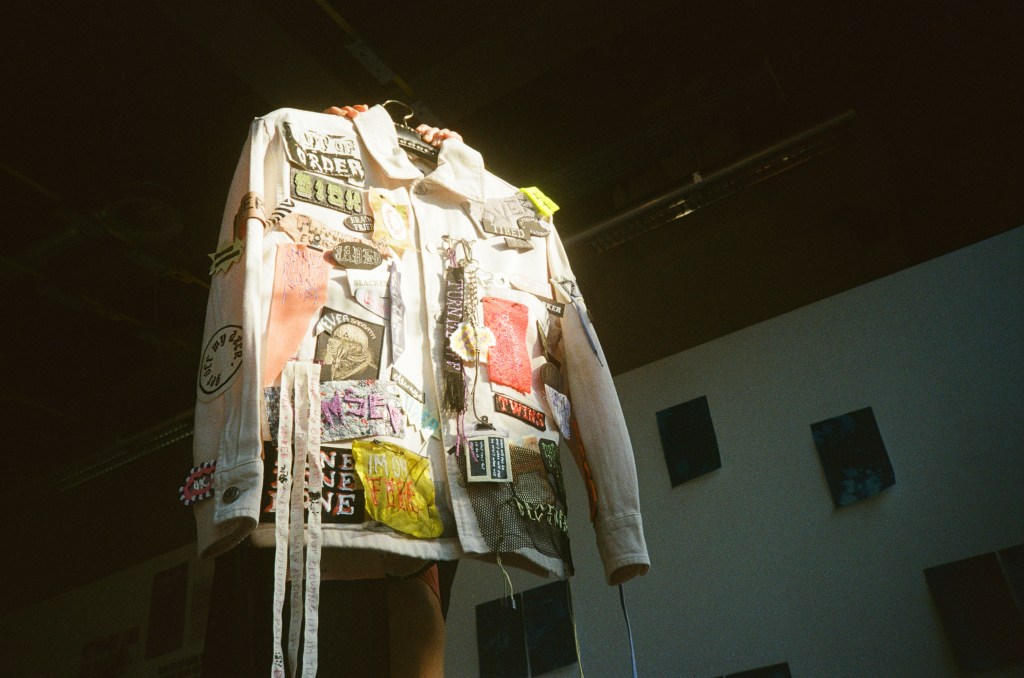
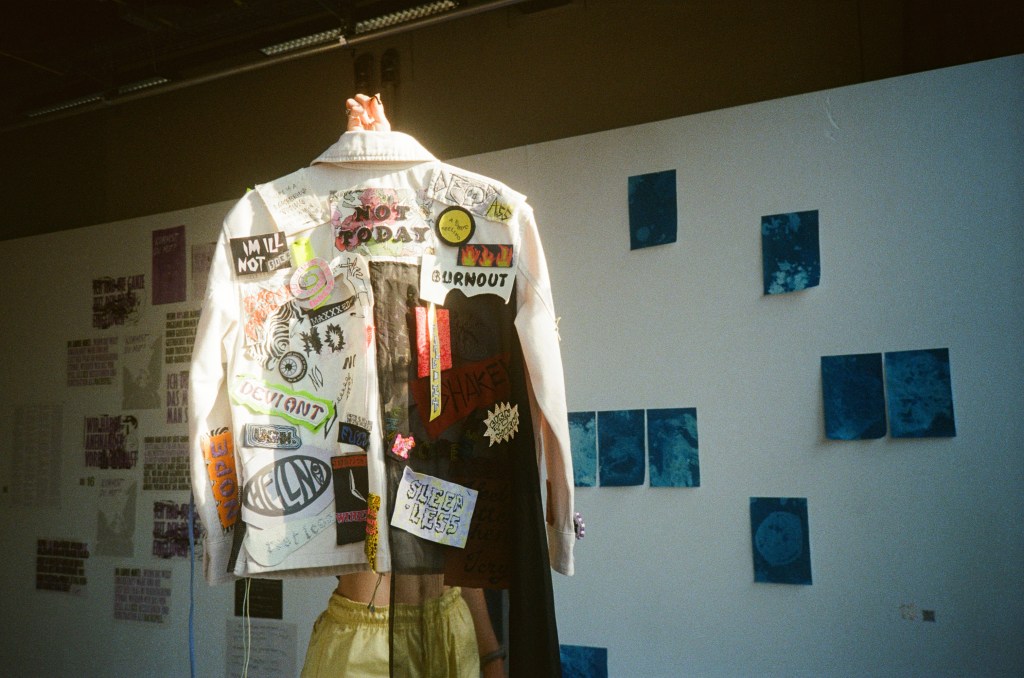
Mental Hellth Dumpster Fire (MHDF) is a worker-style jacket emblematic of the labour politics and contemporary conditions of making a living related to burnout that the artwork critiques, covered in patches with different words and texts on them executed in a range of materialisations and techniques. It makes commentary on a contemporary mood of exhaustion and the mass experience of deteriorating mental health on varying scales, situated in a post-pandemic world still characterised by ‘overworked and underpaid’ and scarred by the period of intense isolation. When it was exhibited and I was asked to provide text for the show’s catalogue, I responded to the organisers with a single question:
What happens when overwork, digital overwhelm,
and a sense of existential exhaustion collide?

Photo by Alan Maag
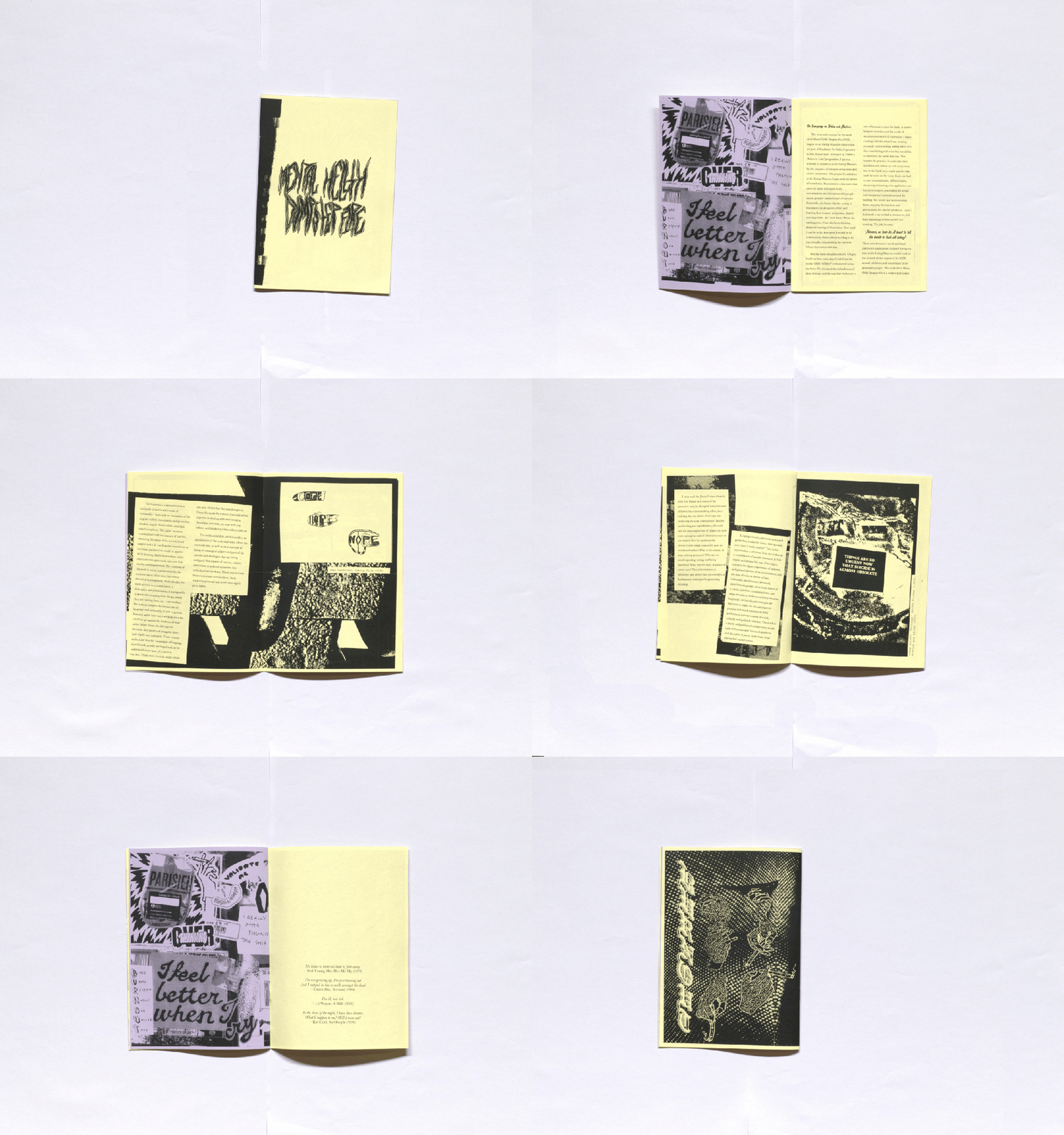
Alongside the jacket itself, the piece has a written counterpart and accompaniment in the form of a zine (pictured below,) produced in a run of 100-pieces that visitors are free to take home with them. In the MHDF zine is a description and analysis of the textual, aesthetic, and formal, qualities and decisions of the work. Ultimately I would call that piece of writing Language as an Artistic Research Device and Medium. What follows is an extract:

The work Mental Hellth Dumpster Fire incorporates some of the patches made during an artist-in-residency position I held the year before at Psychiatric Clinic Wil’s Living Museum Ateliers in Switzerland, as well ones made as a continuation of the practices established in the residency period for which I drew upon an eclectic array of sources and inputs including, but not limited to;
- Song lyrics (e.g. Lil Wayne’s ‘I’m ill, not sick’ or Lana del Rey’s ‘Hope is a dangerous this for a woman like me to have.’)
- Theoretical references (Ann Cvetkovich’s ‘Depression: A Public Feeling’)
- Idioms (Running on Empty)
- Anecdotes from interviews (‘I feel better when I cry’)
- Pop culture references (‘tired & wired’ a hot/not list from a regular column in 90’s era Wired magazine)
- References to medications and the pharmaceutical industry (benzo baby)
- Slogans (pathologise everything)
- Colloquialisms (get off my dxck)
- Wordplays (rest less)
- And the isolation or emphasis of singular words (jaded)
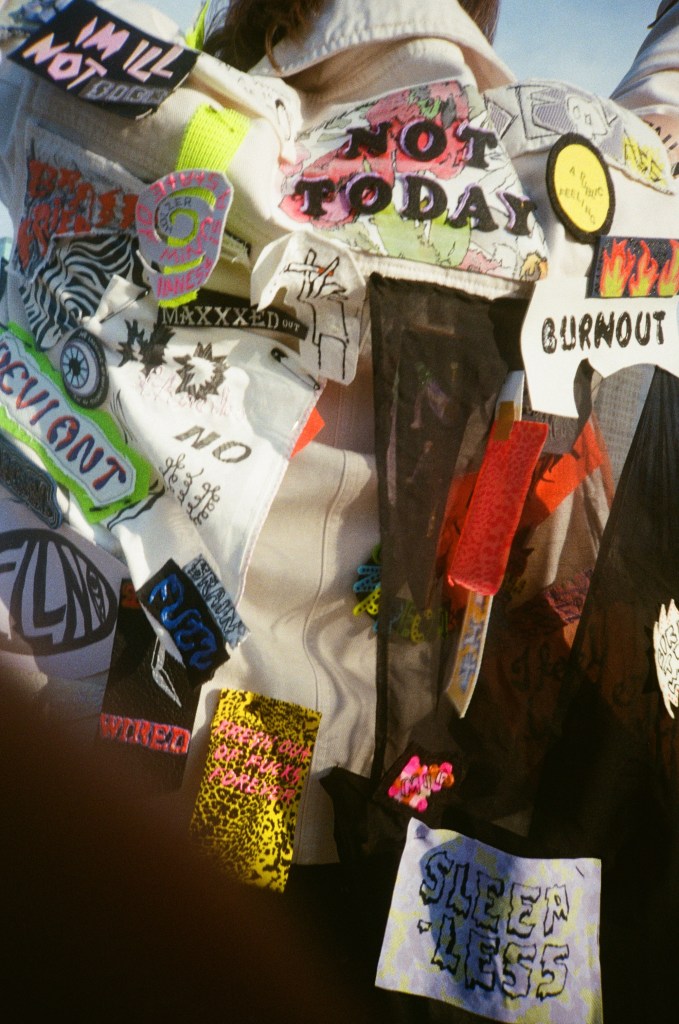
What results is a mish-mash of source points, ‘inside jokes,’ and Holzer Truism-esque statements that present a certain feeling or experience of life based upon my research on burnout, particularly interviews and their anecdotal findings, thus far. All of the patches are made and written by hand, spanning 3D-paints and embroideries to appliqué and cut out/stick on techniques, using found and new materials.
On Language as an Artistic Research Device
and Medium
The impression is simultaneously a multitude of voices and a sense of universality—both with an evacuation of the singular author. Anonymous and genderless speakers sing in chorus whilst creating a visual cacophony. The jacket becomes overwhelmed with the amount of patches, mirroring the status of the overwhelmed subject and a far cry from the normal one or two band patches that would be applied. With lettering chiefly handwritten rather than computer generated, each one feels nearby and impassioned. The intention of this work is not an authorisation for the aesthetic status of the texts, but rather rhetorical heterogeneity. And with this, the work submits to extreme forms of dislocation and pluralisation; it is impossible to know who is saying these things, where they are coming from, etc. I can attribute this attitude towards the intersection of language and authorship in part to gender. Feminist artists have been working since the 1970’s to go against the tendency of male artists before them who felt that the discourse they produced belonged to them both legally and culturally. These womxn understood that the ‘possession’ of language is profoundly gender privileged and, as we understand more now, of a colonial mindset. These same feminist artists (think not only Holzer but Barbara Kruger or Cindy Sherman for instance) introduced an expertise in dealing with and merging theoretical concerns, an ease with pop culture, and implicit politics within their art.
The unidentifiability, undecidability, or pluralisation of the authorial voice allows for contradiction, as well as an awareness of being an entangled subject and part of the systems and ideologies that are being critiqued. Not outside of society, culture, institutions or political concerns, but embedded within them. These voices come from everywhere and nowhere, both uncannily personal and sometimes rigidly prescriptive.
I once read that Jenny Holzer chose to write her Truisms (and many of her successive texts) in all capital letters because of how it has a universalising effect, later realising that my choice of all-caps was producing the same impression. Besides handwriting and capitalisation, this work uses the structural device of ellipsis: the texts leave out a great deal of information and do not answer all of the questions the viewer/reader might reasonably pose (as mentioned earlier.) What is the context of what is being presented? Who are the people speaking, acting, and being described? What was the exact sequence of events here? This indeterminacy is deliberate and, rather than an oversight, a fundamental technique for generating meaning. In being intentionally anonymous and genderless, it calls the viewer into question over ‘does it really matter?’
Time is not conceived as a continual flow, but rather as a constellation of present moments. It feels urgent and irreducibly now. The subject matter is the figure (experience of burnout) and ground (factors of the environment) and the tone of voice is matter-of-fact, vulnerable, irritable and exhausted, sometimes desperate, other times bored of it, whilst somehow remaining funny and using triviality to make a not-funny situation laughable. Artistic formal strategies are deployed to make use of contemporary popular and much-loved punk/DIY aesthetics to convey content of social, cultural, and political criticism. The result is a timely and politicised commentary on the topic of burnout and the social questions and dilemmas it poses, all in the form of an overloaded worker jacket.

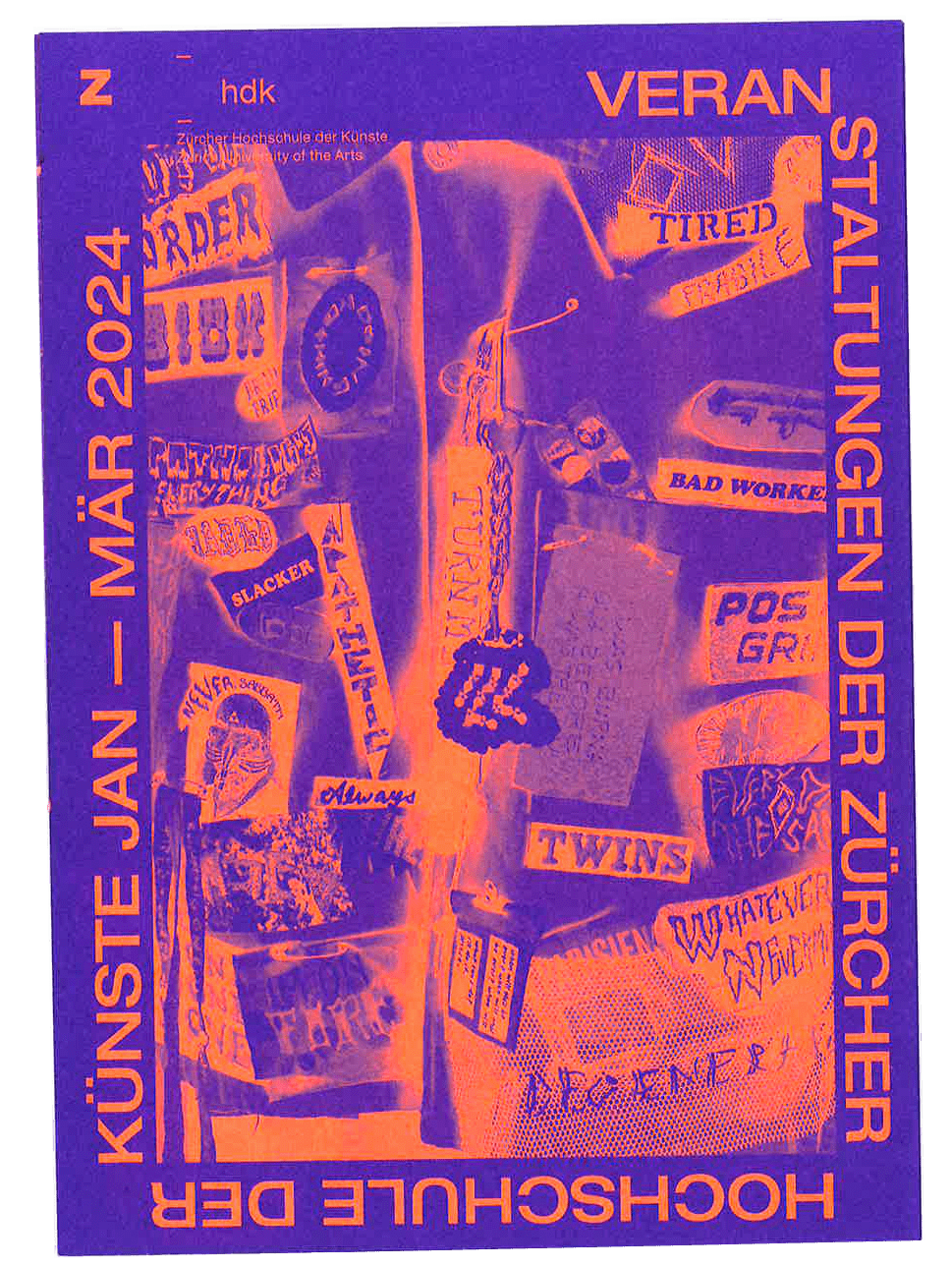
This work was twice featured on the cover of Zurich University of the Art’s Quarterly Programme
Both for Winter 2023, and Spring 2024

 NO FUN