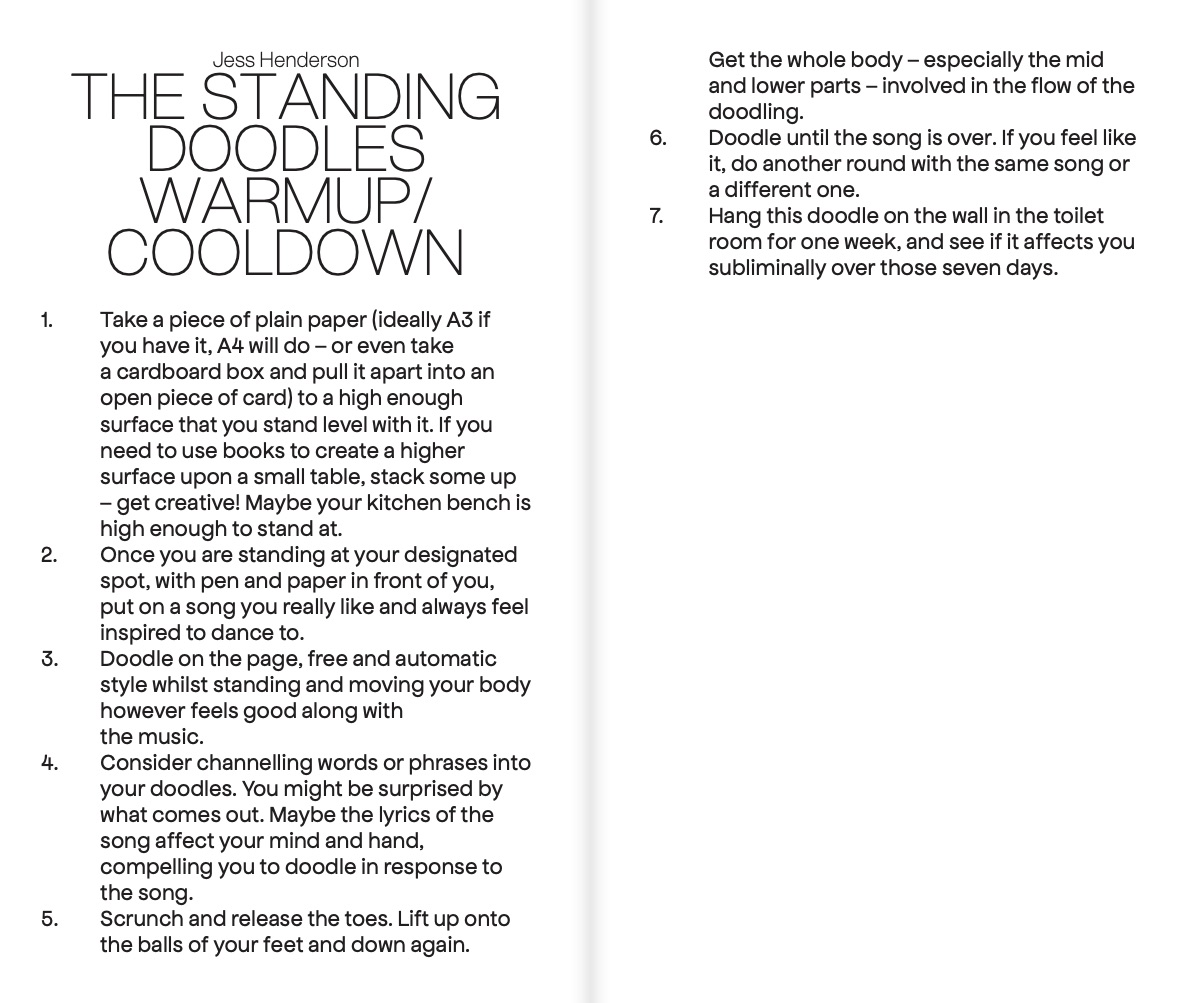
I unknowingly contributed five of my own creative warm-up exercises into a new book called Warm-Ups and Cool-Downs. They’re all here in this post for you to see and try out.
The book is compiled by Eirini Sourgiadaki and published by HumDrum Press, you can download the whole thing for free here. Years ago I shared my warm-up exercises for creative pursuits with the compiler for a separate project and never heard more about it since. To my surprise, I learnt that they’ve been published in this compilation of other warming-up and cooling-down ideas, alongside many other great contributors.
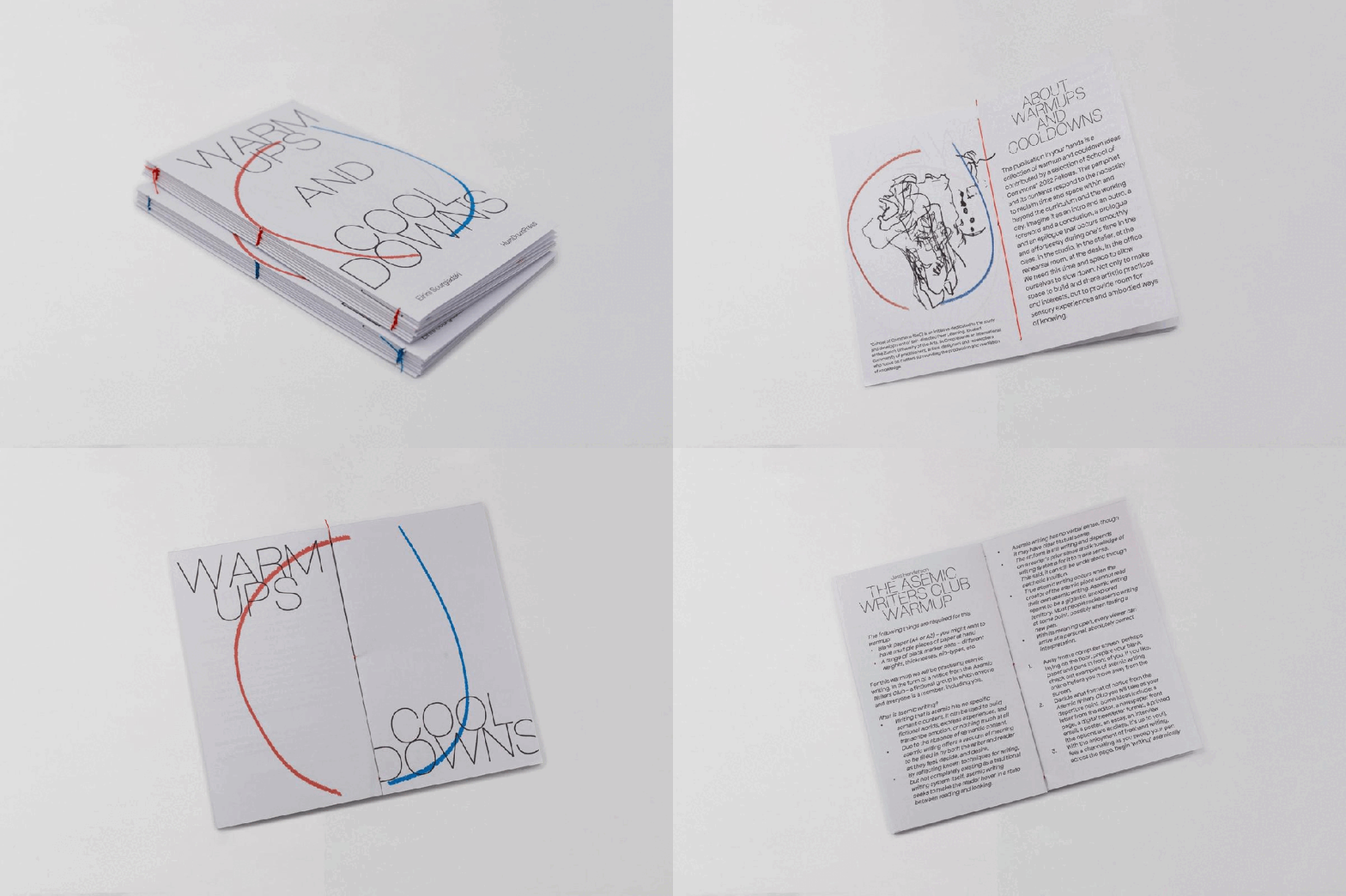
Here is a bit about the book:
“The concept of warmups and cooldowns is the simple and essential engagement of the bodymind in the process of nurturing motivation and drive.
[…] All of the warmups and cooldowns ideas collected in the pamphlet have an artistic character, are non-exclusive, and are open to a wide audience-base to use individually or within a group, in order or randomly selected, with or without instructions.”
– About Warmups & Cooldowns
My Contributions
Here is a list of my contributions, each linked to an image you can save:
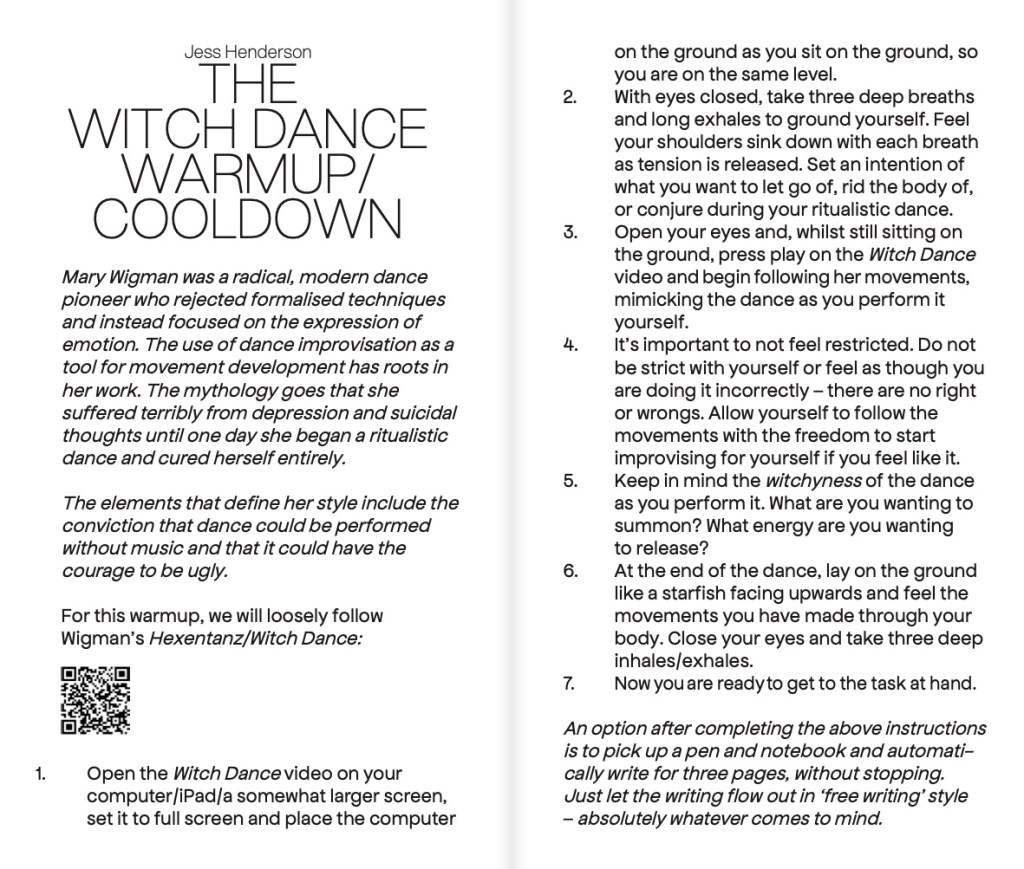
- The Witch Dance Warmup/ Cooldown
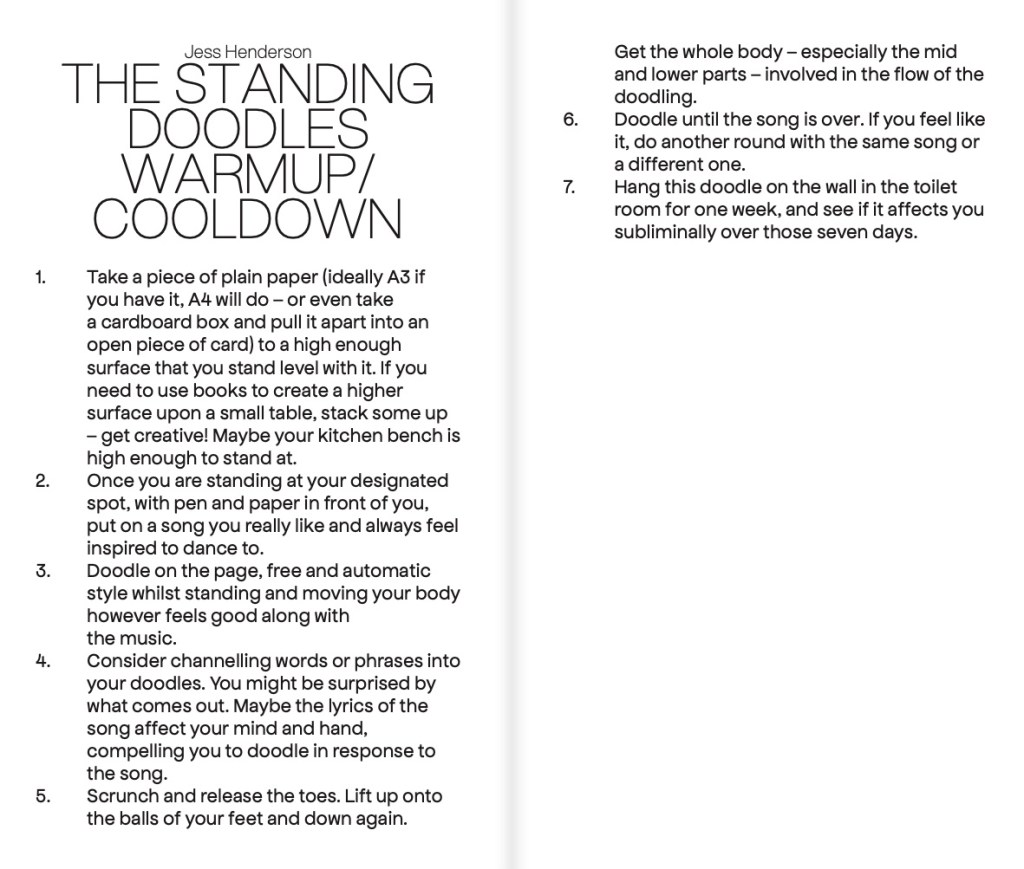
- The Standing Doodles Warmup/ Cooldown
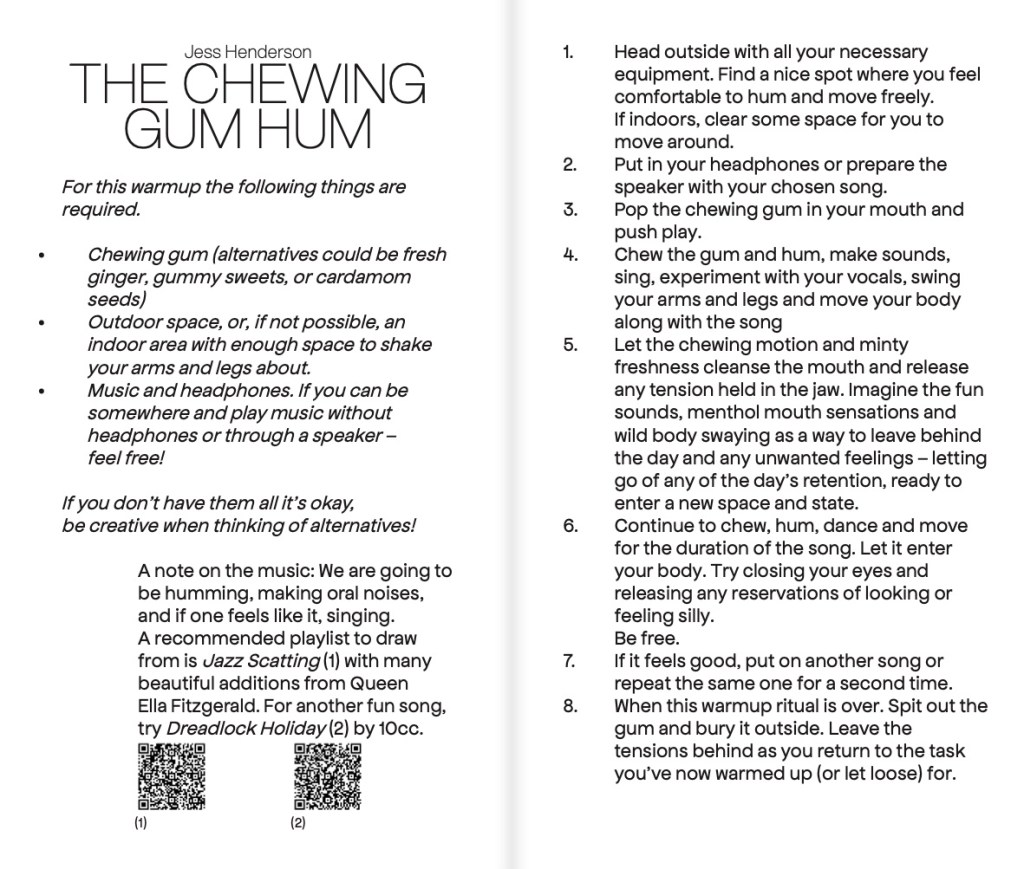
- The Chewing Gum Hum Warmup
- The Asemic Writers Club Warmup, and
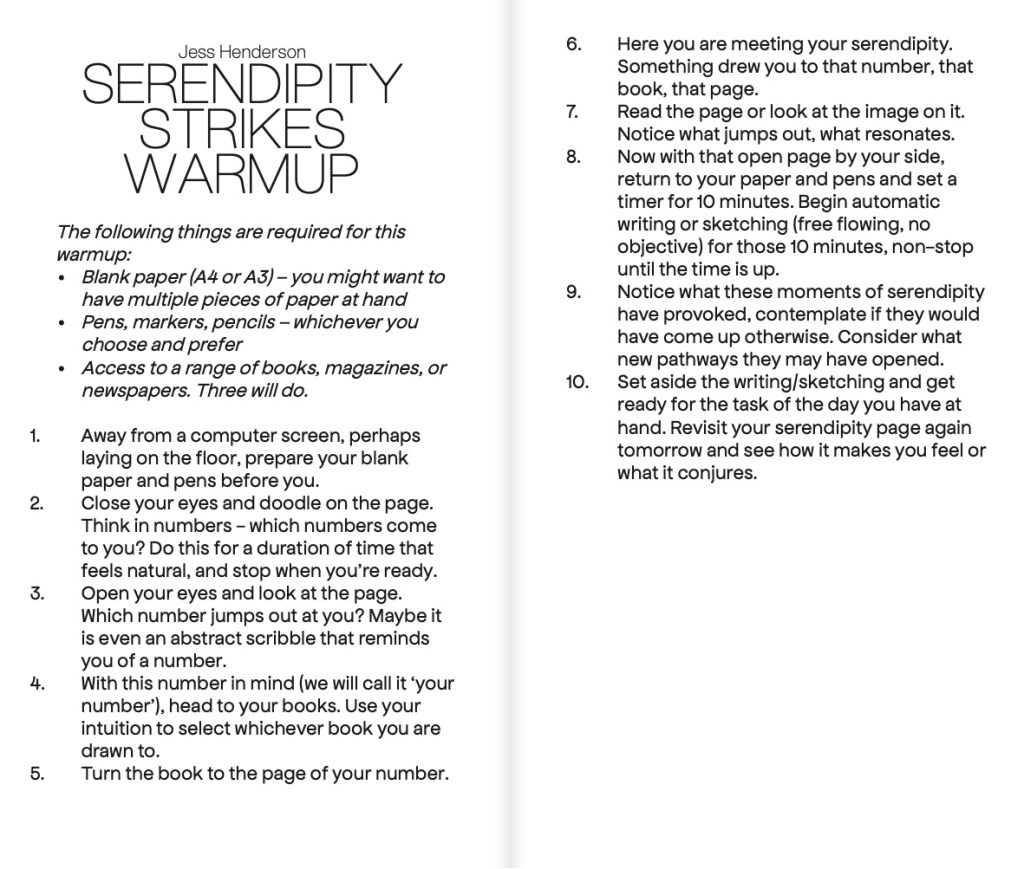
- The Serendipity Strikes Warmup
Two of my favourites are the Asemic Writers Club and Witch Dance warmups. The Witch Dance warmup is inspired by Mary Wigman’s Hexentanz (Witch Dance). German choreographer Wigman is considered a pioneer of modern dance, and this surviving clip of Hexentanz from 1926 (approx.) is still drawn upon in contemporary dance today. This piece was included in a MoMA exhibition in 2012 titled Inventing Extraction where they described Wigman as;
“Mary Wigman was a key example of a new type of artist: the dancer who choreographed for herself. Her work was central in the development of freie Tanz (free dance), a form in stark contrast to ballet, the earlier tradition of dance as fine art.
[…] Wigman focused on bodily movement itself, independent of theatrical scenarios, as the essential material of dance—she often used little or no stage scenery, and developed her compositions through improvisation instead of through the use of defined steps. Rather than beginning with a piece of music, she found her own rhythms for a work, adding minimal musical accompaniment later.”
– MoMA ‘Inventing Abstraction’
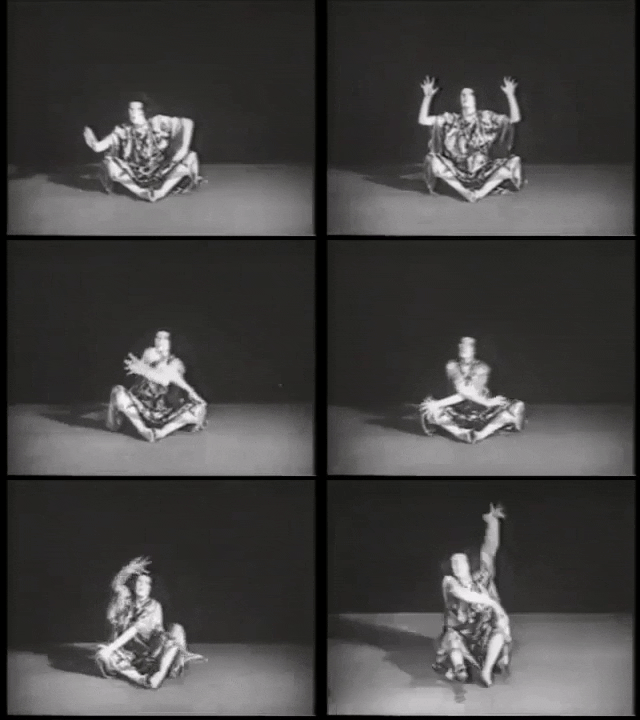
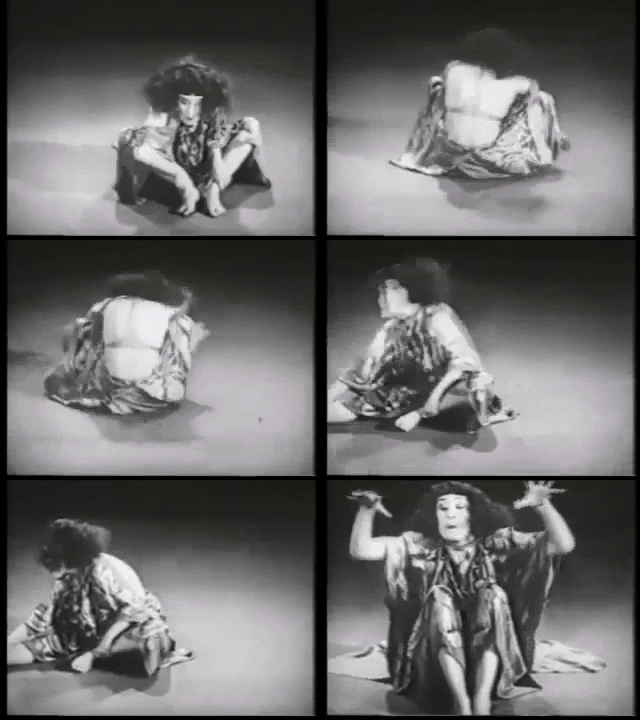
Hexentanz left an impression on me from the first time I saw it and thus, became The Witch Dance Warmup. You can see all of my contributions below and download the whole book for free here.

 NO FUN