I’m sharing something I thought I never would.
It was recently the two-year anniversary of this text being published. I haven’t read it since and still don’t feel ready to. Or perhaps, it is never necessary to reread anything you’ve ever written once it’s out in the world.
In 2021, I was contacted by Arts of the Working Class, a Berlin-based street newspaper about arts, culture, and theory, who had seen my work through the Band of Burnouts research lab I had established that year – which was very active and visible and looked quite unusual for something creating a space to talk about burnout. Their business model is interesting. It’s basically a very-Berlin arts publication in the form of a newspaper that people in need can sell on the streets and keep all their collections from their sales. I knew of AOTWC well already, having spent the summer two years prior in Berlin attending an intensive art/theory summer school where AOTWC made an appearance and we visited their workspace. That summer, I stayed on in Berlin to start writing Offline Matters (titleless at the time, and more of a ‘I-feel-I-might-have-something-here’ idea than anything resembling a manuscript – let alone having approached anyone to convince them to publish it!), but that’s an aside.
During that Band of Burnouts time, AOTWC wrote me asking if they could commission me to write a piece for their next issue on the theme of ‘WORLD HELL ORGANISATION: Is that all there is?’ Because of some ties between the School of Commons fellowship I was in (Band of Burnouts was my research lab within that) and the newspaper, I felt a bit obliged. But ultimately I wanted to contribute something, so I agreed.

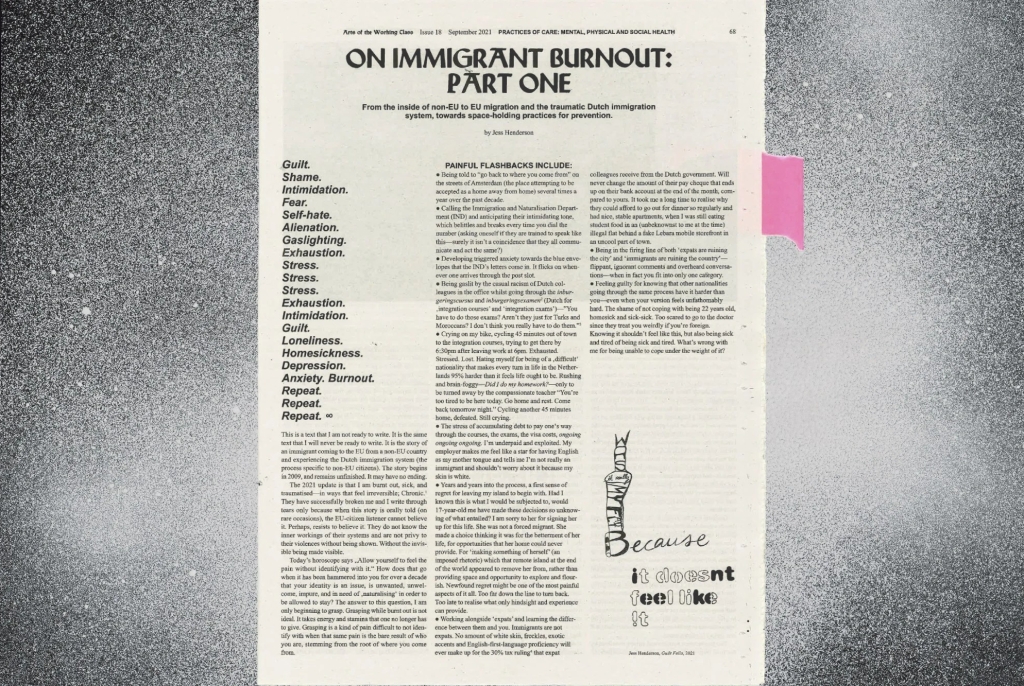
Double cover and digital version of On Immigrant Burnout (top right)
The next part of this story of this text is where I fail to recognise myself. With the research lab predominantly dealing with other people participating and sharing their stories of and relationship to the phenomenon of burnout, I wasn’t going to write something based upon another person’s experience. Instead, I had the bright idea to write about my own experience of burnout and how in later years I’ve seen how it was correlated less to my fulltime job at the time, and more to the immigration and so-called ‘integration’ process I was going through in the Netherlands. For the past three years I’ve been living in Switzerland to do a masters degree, which has been sobering in contrast to to the seven or so years prior to that spent in the Netherlands (well, Amsterdam) going through their processes as a non-EU immigrant (I’m from New Zealand), now with space and time and conversations with (political) theorists, thinkers, and philosophers weighing in to help me understand why I felt so shit and intimidated through all those years of jumping through imposed ‘integration’ hoops.
While in the midst of not coping at all with this trauma and ongoing hardcore anxiety towards anything related to being a non-EU immigrant to an EU country, I decided to write a text about that procedure (that I had not escaped by being in Switzerland for a bit. I still had consistent communication and demands coming from the Dutch government’s immigration department). In retrospect, I don’t know why I though this was a good idea. The closest I can get to is maybe I thought ‘it’s time’ to discuss this private turmoil publically, or that it was so all-consuming I thought this procedure and its psychosomatic effects on the people within it needs to be made visible. After all, I felt like a ghost in Dutch society. Operating day-to-day being miscategorised as a the dreaded ‘expat’ because of how I look (white, English mother-tongue) without any of the safety nets (a company’s backing) or benefits (the 30% tax ruling) of being an expat. Even by the tone of that sentence, you can see it’s still a gripe. Moving on from haunting around the background of Amsterdam…
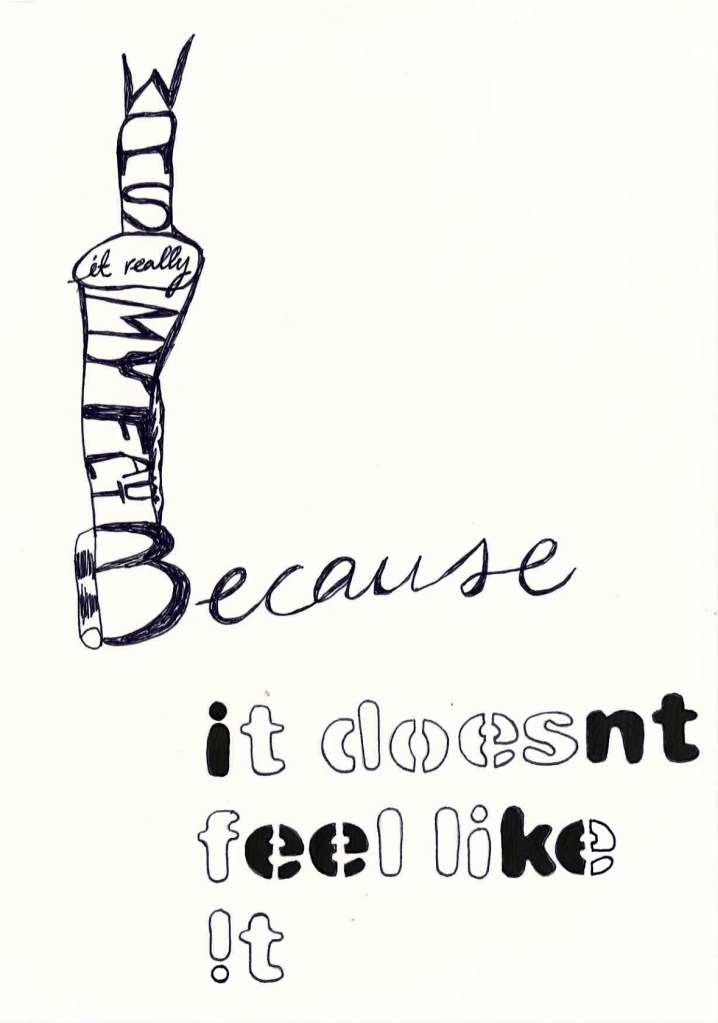
By Jess Henderson, commissioned by Arts of the Working Class.
I told the newspaper I would write a piece on immigrant burnout – to which they said ‘great!’ And then I procrastinated doing it for weeks because I was frozen in fear at the thought of it. So out of my mind at the time with this years-old unkempt open wound, on a weekend in a high-altitude Swiss town sitting in an old-fashioned hotel room – I said ‘fuck it, today is the day.’ If I used substances I would have gotten high as fuck. Nevertheless, you can get out of your mind with many things sold over the counter. Not alcohol, high caffeine energy drinks. I went for a run buzzed out on the cheapest canned caffeine the local supermarket had, and when I got back to the hotel room I did press ups and drank some more. Now, I was ready to write about the worst time of my life.
NOT READY
I couldn’t see straight but purged onto my laptop whatever I felt needed to be said. In the end, it was long and we seperated it into two parts. Part one was in print with a QR code linking to part two, which was online. Part two, I like. Drawing upon the work of What Would an HIV Doula Do? – a group joined in the ongoing AIDS crisis who understand doulas as people who hold space during times of transition – I imagine what an immigration doula would do. I haven’t revisited that idea since though I believe in its potential. Perhaps the day will come when I’m ready to take that further.
I’ve never read what went into publication again. I wasn’t ready to write it – I shouldn’t have written it – and I am not yet ready to read it. Partly because I know what I’ll have to revisit: an overly-emotional painful piece of text that has no distance from its subject and probably comes at it with a victim mentality that conjures no sympathy or empathy, or even exposure of a little-made-visible process. Just a piece from someone who was hurting a lot and should be saying these things to a therapist (I had already been in therapy for years about the immigration-trauma stuff) rather than publically, addressing the audience like they’re a responsible politician who should DO SOMETHING(!!) not a person reading the newspaper on the subway to work.
THE EDITING PROCESS
The editing process is a process I love. I love working with someone who can make the hard cuts, tell you what is boring or what should be given more attention and space, a person who is working with you in service of the text – that feeling of working together on a shared goal where nothing is personal – I love being edited. With this text, I hated it. Editing meant revisiting and I felt I had just laboured through producing what was requested and wanted it to be over with already. I was barely even protective of this personal story. ‘Take it and do what you want with it, just leave me out of it’ was what I wanted to say, though of course you can’t just abandon it with the publisher. That’s not how it works.
During this whole thing I was contacted by my editor through a personal channel, informing me he had just found a letter firing him on the server and it was something he thought I should know. “I just felt you should know who you’re working with,” he said. Yes, he did get fired. Yes, we kept in touch and met IRL for the first time a few months after that. Besides the written piece, I was also commissioned for two original drawings to be published with it, Guilt Fella (pictured above) and Coping Fella (below.)
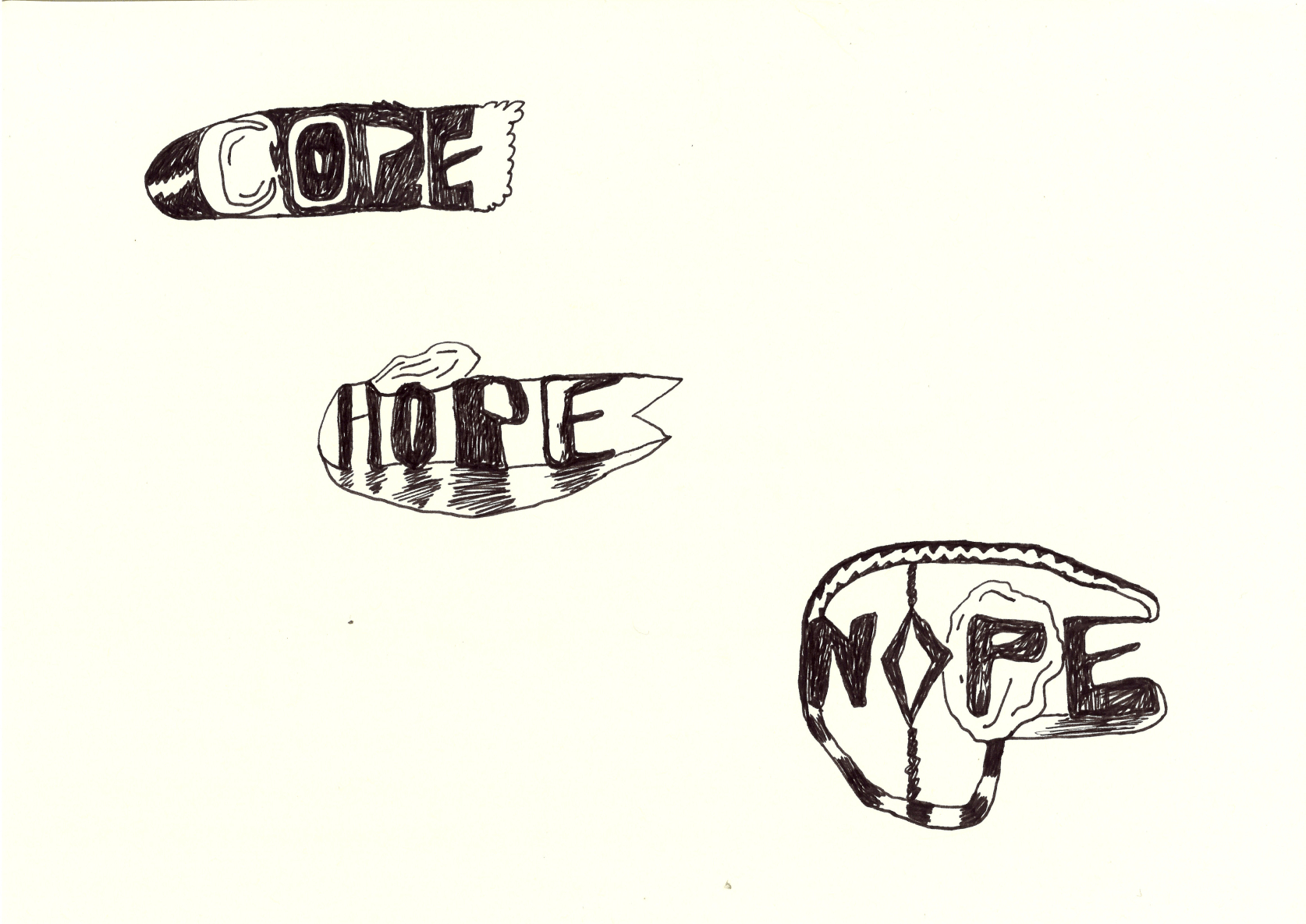
By Jess Henderson, commissioned by Arts of the Working Class.
YES, FINALLY, HERE IT IS.
Should you still feel like you would like to read On Immigrant Burnout after all of this insight, you can find part one here, and part two here. My apologies in advance. I thought I’d let this thing get buried on the internet, alas, something made me wake up this week and decide to dig it up one more time. This is what it means to write. It’s normal to not love anything you’ve ever written after the fact. It’s normal to feel your best work happens in your journal and will never see the light of day. The writer I am does not exist on the internet, or in print, or anywhere another’s eyes can find it. Writing is rarely romantic or pleasurable, publishing things can and will hurt your heart. I’ve never felt more alone than when I’m sitting writing. It’s not all sipping tea typing in a cosy setting and adoring every minute of it. Mostly its pouring something onto a page (sometimes, yourself – even writing fiction is an exposure of yourself) and that feeling good in the flow, only to never feel the need to look at it again once it’s out. At least this is my experience of writing or ‘being a writer.’ Rarely do we choose this vocation. It just somehow chooses us.
 NO FUN